


After a partner dies, even simple tasks can feel overwhelming. This section offers clear, practical guidance to help you understand what may happen next and what may need your attention.
You do not have to do everything at once. Take one step at a time, ask others for help where you can, and return whenever you feel ready.
What happens when someone dies at home
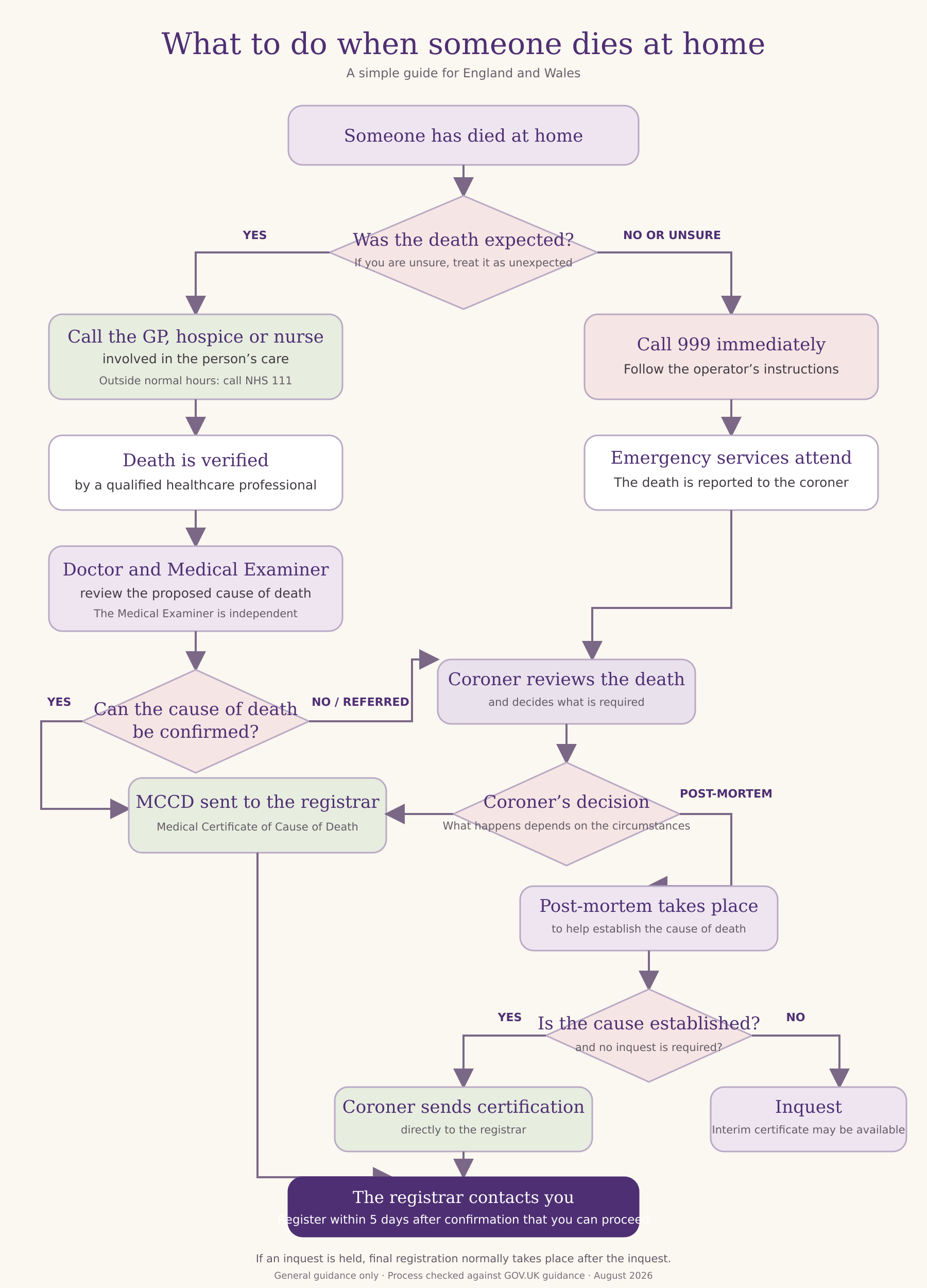

First 5 days after someone has died
The Coroner and Post-Mortem
Because my husband died unexpectedly at home, his death was referred to the Coroner. The Coroner decided that a post-mortem examination was necessary to establish the cause of death.
The hardest part was waiting.
We could not move forward fully with the funeral arrangements and we did not know how long the process would take. When I received the call confirming that the post-mortem would take place the following day, I felt a mixture of sadness and relief.
We did not want my husband to go through the examination, but we understood why it was necessary.
Registering the Death
After the cause of death had been established and the necessary information had been sent to the registrar, we were able to register my husband’s death.
Collecting the death certificate was one of the most painful moments of my life. Holding that certificate made everything feel unbearably real.
Why the Death Certificate Matters
A death certificate is an important legal document. Certified copies may be needed when contacting:
Funeral Directors
Banks and building societies
Insurance companies
Pension providers
Employers
Mortgage and utility providers
Solicitors and probate services
Other financial and legal organisations
Several organisations may require an original certified copy, so families may find it helpful to purchase multiple copies when registering the death.
Receiving the certificate can be emotionally difficult because it may make the death feel painfully real. However, it also enables the family to begin completing many of the necessary practical, financial and legal arrangements.